Product9 min read
The Creative Process Behind Cometbid Social: Nothing Happens by Magic
Every feature on Cometbid Social is an intentional response to a real problem. Here’s the creative process behind building the platform — from problem identification to design decisions to the discipline of saying no.
People look at a product taking shape and assume it appeared fully formed. They don't see the 47 iterations of the feed layout. They don't see the three different messaging architectures we tried before landing on the current one. They don't see the spreadsheet with 200+ feature ideas that we deliberately said "not yet" to. Since our first newsletter in March 2026, we've been heads-down building — and every decision behind what we're creating follows the same process. Everything that exists was created — it didn't happen by magic. This article pulls back the curtain on the creative process behind Cometbid Social.
01Start With the Problem, Not the Solution
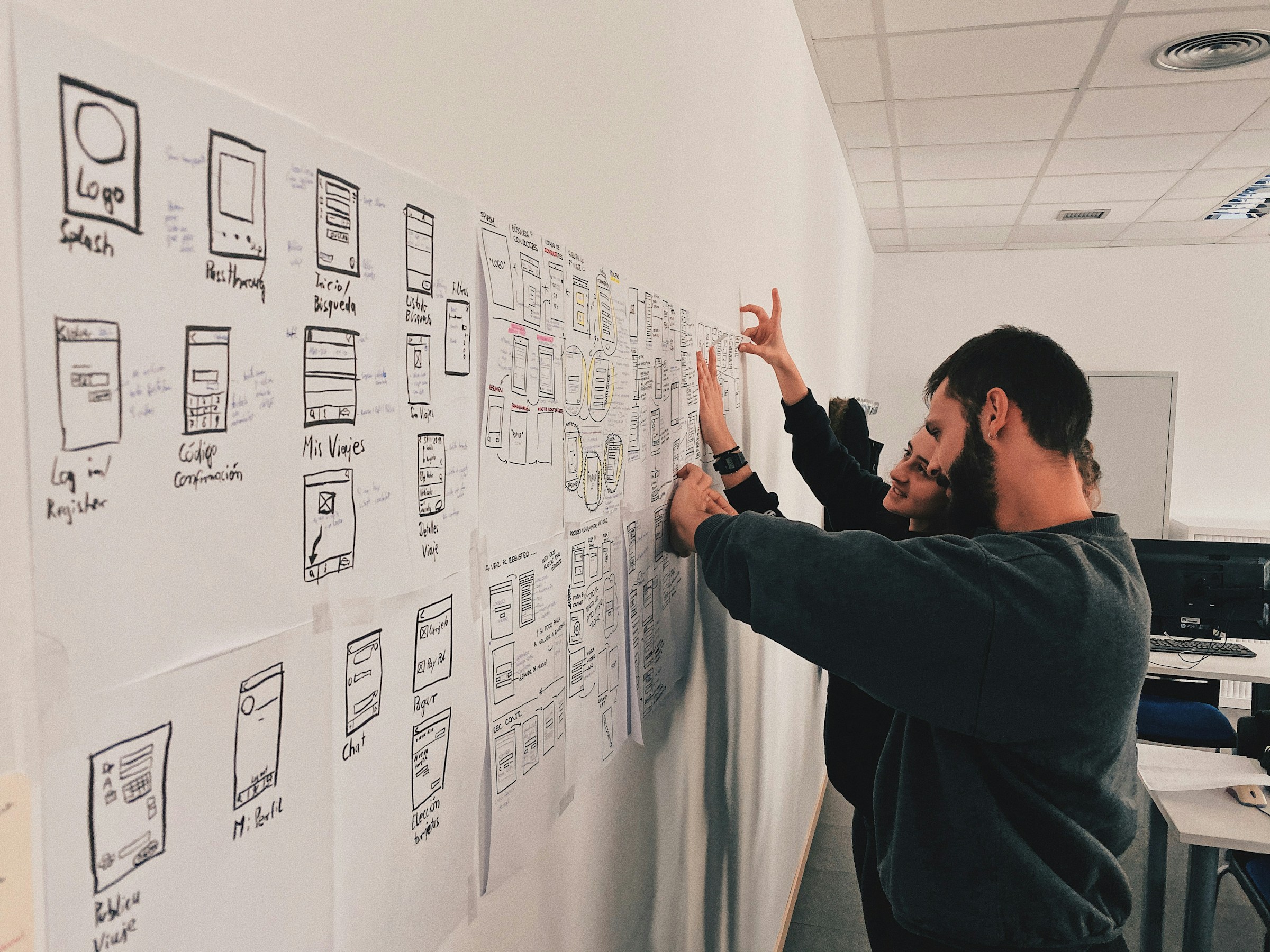
We didn't open Figma first. We didn't start by designing screens or choosing color palettes. We sat down and wrote out every frustration we'd experienced as tech professionals trying to collaborate across platforms. The fragmented workflow — bouncing between Slack, email, Google Docs, and payment platforms just to complete one project. The payment anxiety — never knowing if a client would actually pay, or if a freelancer would actually deliver. The lost context — having critical project decisions buried in chat threads that nobody could find six months later.
That list of frustrations became the spec. Not a product spec full of features we thought would be cool, but a problem spec listing the specific pain points real people experience daily. Each problem got ranked by severity and frequency. The ones that scored highest on both dimensions became the foundation of the platform.
From problems to architecture: each core frustration mapped to a system capability. Fragmented workflow → unified workspace. Payment anxiety → escrow and verified identities. Lost context → persistent project spaces with embedded communication. The architecture didn't emerge from technical preferences. It emerged from human problems that needed solving.

02The Discipline of Saying No
We have 200+ feature ideas on a spreadsheet. We're building fewer than 30 for the first release. That ratio — roughly 85% rejection — isn't a failure of creativity. It's the discipline that keeps a product focused. Every feature that makes the cut must serve the core loop: connect → collaborate → earn. Everything else waits, no matter how exciting it sounds in a brainstorming session.
The temptation to add "just one more thing" is constant. A recommendation engine would be cool. An AI assistant would be marketable. A video calling feature would reduce platform-switching. All true. All deferred. Because every feature you add is a feature you must maintain, document, test, monitor, and support. A lean product that works reliably beats a bloated product that crashes under its own complexity.
Discipline is the hardest part of product building. It's easy to say yes — yes makes people happy in the moment. But every yes is a commitment of future time and attention. The features we said no to aren't gone. They're on the roadmap, waiting for the right moment when the foundation is solid enough to support them. Building a platform is a marathon, not a sprint, and the runners who win marathons are the ones who manage their energy.
03Design as Problem-Solving
We're building an embedded chat panel because switching apps breaks flow. We measured it — every context switch costs 5-15 minutes of refocusing time. Multiply that by the dozens of times per day a freelancer switches between their work tool and their communication tool, and you lose hours of productive time weekly. So we're embedding communication directly into the workspace. One screen. No switching.
The verified badge is part of the design because trust is the prerequisite for transactions between strangers. On existing platforms, anyone can claim to be a senior developer or a funded startup. There's no way to verify without external research. Our verification system addresses a specific problem: reducing the trust gap between people who've never met but need to exchange money for work.
The achievement system is being designed because reputation should be earned through action, not self-reported. Traditional profiles are wish lists — people describe who they want to be, not who they are. Achievements will track what you've actually done on the platform. Projects completed. Milestones hit. Collaborators who rate you highly. Every pixel on the screen is there because it solves a specific, documented problem. Nothing decorative. Nothing arbitrary.
04Iteration Over Perfection
The first version of everything is rough. The first API design had inconsistent naming conventions, unclear error responses, and endpoints that tried to do too much. The first UI was functional but ugly — misaligned elements, inconsistent spacing, and a color palette that looked like it was chosen by committee. But we put it in front of testers. And testing taught us what needed to change.
You cannot iterate on something that doesn't exist. This is the most important lesson in product development. A working prototype with rough edges teaches you more in one week than a perfect design document teaches you in six months. Users interact with working software in ways you never predicted. They click things you didn't expect. They ignore features you thought were essential. They love features you almost cut.
Our process is simple: build the minimum version, put it in front of real people, watch what happens, then improve. Repeat forever. The current state of the platform looks nothing like where we started, and the next iteration will look different again. Perfection is a direction, not a destination. Show your work, then improve it. That's the only process that actually produces great products.
05The Invisible Work
For every feature users will see, there are 10 infrastructure decisions they'll never know about. Rate limiting that prevents abuse. Encryption that protects data at rest and in transit. Circuit breakers that prevent cascading failures when a downstream service goes down. Session management that keeps users authenticated without compromising security. Database indexing strategies that keep queries fast as data grows.
This is the unglamorous engineering that makes the visible features reliable. Nobody tweets about their rate limiting configuration. Nobody gets excited about DynamoDB partition key design. But these decisions determine whether the platform stays up under load, whether user data stays safe, and whether the system recovers gracefully when things go wrong — because things always go wrong.
Creation isn't just the surface. It's everything underneath. The iceberg metaphor applies perfectly to software: users will see 10% of the work, and that 10% only functions because of the 90% they'll never see. Respecting the invisible work — giving it the same attention and craftsmanship as the visible features — is what separates platforms that scale from platforms that collapse.
Nothing in Cometbid Social is happening by accident. Every feature, every architectural decision, every design choice is an intentional response to a real problem. Since our first newsletter in March 2026, we've been building with this discipline — and as we get closer to putting the platform in users' hands, the creative process stays the same. Disciplined problem-solving, applied consistently. Everything that exists was created. Nothing happens by magic.
ProductDesignCommunity
Never miss a post
Subscribe to get the latest TCTF articles delivered to your inbox.