
Engineering12 min read
The Rise of Edge Computing: Why Your Next App Should Run Closer to Users
Edge computing is reshaping how we build web applications. Explore edge functions, CDN-based compute, latency reduction strategies, data sovereignty considerations, and when edge makes sense versus traditional server regions.
60-80%Avg. Latency Reduction
300+Edge Locations
4Platforms Compared
40+Data Sovereignty Regions
For decades, web applications have run in a handful of data center regions — us-east-1, eu-west-1, ap-southeast-1. Users in Lagos, São Paulo, or Marseille send requests that travel thousands of kilometers to a server, wait for a response, and travel back. Every millisecond of that round trip is latency your users feel. Edge computing flips this model: instead of bringing users to your servers, you bring your servers to your users. This article explores the edge computing landscape in 2026, the platforms available, the tradeoffs involved, and when edge is the right choice for your application.
01What Edge Computing Actually Means
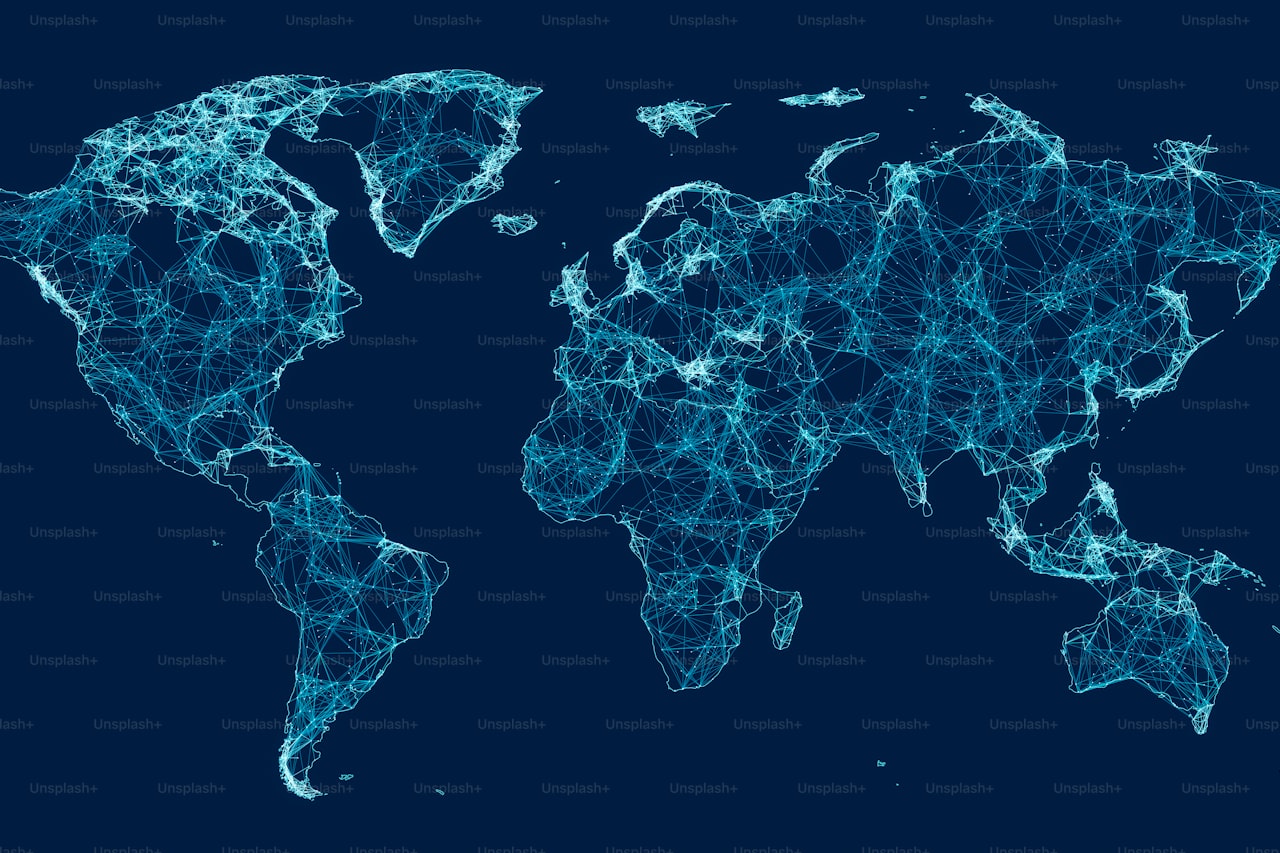
Edge computing runs your application code on servers distributed across hundreds of locations worldwide, physically close to your users. Instead of a single origin server in Virginia, your code runs in Johannesburg, Paris, Tokyo, and São Paulo simultaneously.
The key distinction is between edge for static content (CDNs have done this for 20 years) and edge for compute (running actual application logic at the edge). A CDN caches your images and HTML. Edge compute runs your authentication checks, API transformations, A/B tests, and personalization logic at the same locations.
In 2026, the major edge compute platforms are Cloudflare Workers (the largest network with 300+ locations), AWS Lambda@Edge and CloudFront Functions (integrated with the AWS ecosystem), Vercel Edge Functions (optimized for Next.js), and Deno Deploy (built on the Deno runtime with global distribution). Each has different runtime constraints, pricing models, and integration stories.
🌍CDNs cache static content at the edge. Edge compute runs your application logic there. The difference is between serving a cached image and running your auth check 50ms from the user.

02The Latency Argument: Numbers That Matter
Latency is not just a performance metric — it is a user experience metric. Research consistently shows that every 100ms of added latency reduces conversion rates by 1-2%. For a user in Nairobi accessing a server in Frankfurt, the physical distance alone adds 120-150ms of round-trip time. Add TLS handshake, DNS resolution, and server processing, and you are looking at 300-500ms before the first byte of your response.
Edge compute reduces this dramatically. A Cloudflare Worker running in Nairobi responds in 5-15ms. The same logic running in Frankfurt takes 150-200ms from Nairobi. That is a 10-40x improvement in time-to-first-byte.
At TCTF, we plan to move authentication token validation, geolocation-based routing, and request transformation to edge functions. Based on the platform benchmarks from Cloudflare and Vercel, we expect p50 latency for these operations to drop from around 180ms to under 15ms for users in Africa and South America — regions currently underserved by our current deployment region. This is on the roadmap and will be one of the most impactful infrastructure changes for our global user base.
The impact is most dramatic for users furthest from traditional data center regions. Users in Western Europe or the US East Coast see modest improvements (20-40ms). Users in Africa, South America, Southeast Asia, and Oceania see transformative improvements (100-300ms).
03Data Sovereignty: The Regulatory Driver
Latency is the performance argument for edge computing. Data sovereignty is the regulatory argument — and in 2026, it is increasingly the deciding factor.
GDPR requires that EU citizen data be processed in compliance with EU regulations. Brazil's LGPD imposes similar requirements. Nigeria's NDPR, South Africa's POPIA, and India's DPDP Act all have data localization provisions. Running all your compute in us-east-1 means every request from these regions sends personal data across borders.
Edge compute can process requests locally. A user in São Paulo hits an edge function in São Paulo. The function validates the token, checks permissions, and transforms the request — all without the user's data leaving Brazil. Only the processed, anonymized result is forwarded to the origin if needed.
This is not a complete solution — your database still lives in a region, and many operations require origin access. But edge compute reduces the surface area of cross-border data transfer. Authentication, authorization, request validation, and personalization can all happen locally.
At TCTF, data sovereignty is a primary driver for our planned edge compute adoption. With members expected across 40+ countries, processing every request through a single region will become a compliance liability. Our plan is for edge functions to handle privacy-sensitive operations locally, with only aggregated, non-personal data reaching the origin.
⚖️GDPR, LGPD, NDPR, POPIA, DPDP — data localization regulations are multiplying. Edge compute processes requests locally, reducing cross-border data transfer surface area.

04When Edge Makes Sense (and When It Does Not)
Edge compute is not a universal replacement for traditional servers. It has constraints: limited execution time (typically 10-50ms for edge functions, up to 30 seconds for some platforms), limited memory (128MB on most platforms), no persistent connections (no WebSockets, no long-polling), and limited access to databases (your database is still in a region).
Edge makes sense for: authentication and token validation, request routing and A/B testing, geolocation-based personalization, API response transformation, bot detection and rate limiting, and static site generation with dynamic elements.
Edge does not make sense for: complex database queries (the database is not at the edge), long-running computations (video processing, ML inference), real-time communication (WebSockets need persistent connections), and operations that require strong consistency (edge introduces eventual consistency).
The pattern that works best is a hybrid architecture: edge functions handle the fast, stateless operations close to the user, and the origin handles the stateful, complex operations that need database access. The edge function acts as an intelligent proxy — it handles what it can locally and forwards the rest to the origin with enriched context (geolocation, device info, validated identity).
🏗️ Hybrid is the answer. Edge for fast, stateless operations (auth, routing, personalization). Origin for stateful, complex operations (database queries, business logic). The edge enriches the request; the origin processes it.
Edge computing in 2026 is not experimental — it is production-ready and increasingly necessary. The latency benefits are real, the data sovereignty requirements are growing, and the platforms are mature. Start with authentication and request routing at the edge, measure the latency improvement for your underserved regions, and expand from there. Your users in Lagos, São Paulo, and Jakarta will notice the difference.
Editor's Note: This is part of the TCTF Engineering Series. Platforms were evaluated as of January 2026.
CloudPerformanceServerlessDevOps
Never miss a post
Subscribe to get the latest TCTF articles delivered to your inbox.