Community8 min read
Skills Over Degrees: 3 Trends Reshaping Tech Careers in 2026
The degree is dying. The portfolio is king. In 2026, verified credentials, remote-first talent pools, and community-driven learning are reshaping how tech careers are built. TCTF is designed around all three — ranking professionals on real contributions, not paper qualifications.
Verified CredentialsTrend 1
Remote-First PoolsTrend 2
Community LearningTrend 3
Portfolio-FirstCareer Model
Peer ReviewLearning Model
Never LowerBarriers
The tech industry stopped requiring computer science degrees a long time ago. Since the early 2000s, developers with any degree — or no degree at all — have been getting hired based on what they can build. That battle was won two decades ago. The degree requirement is old news. What is new in 2026 is that AI has changed what 'technical ability' even means. When AI can write code, generate documentation, and build prototypes in seconds, the ability to code is no longer the career differentiator it once was. The new differentiators are critical thinking, system design, and the judgment to evaluate whether AI-generated solutions are actually correct. These are the skills that matter now — and they cannot be measured by a degree or a coding test. Three trends are converging around this shift: verified credentials that prove thinking ability (not just coding ability), remote-first talent pools that make geography irrelevant, and community-driven learning that develops judgment through practice rather than lectures. TCTF is designed around all three. The platform ranks professionals on real contributions that demonstrate critical thinking and collaboration — not on paper qualifications or lines of code. The barriers to building a tech career have never been lower. But the bar for what counts as valuable has never been higher.

01Trend 1: Critical Thinking Over Coding Ability
For over twenty years, the tech industry has hired based on what you can build rather than what degree you hold. A developer with a music degree who could ship production code was always more valuable than a computer science graduate who could not. That shift is old history.
But here is what has changed: AI can now write the code. It can generate unit tests, scaffold APIs, build UI components, and produce documentation. The mechanical act of coding — the thing that used to separate technical people from non-technical people — is being automated. This does not mean developers are obsolete. It means the definition of a valuable developer has shifted.
What employers need now is not someone who can write a function. They need someone who can decide which function to write and why. Someone who can design a system that handles edge cases AI does not anticipate. Someone who can look at AI-generated code and identify the subtle bugs, the security vulnerabilities, the architectural decisions that will cause problems at scale. Critical thinking. System design. Judgment under uncertainty.
These skills cannot be measured by a degree, a certification, or a coding test. They can only be demonstrated through real work — designing real systems, making real architectural decisions, collaborating with real teams on real problems. TCTF's achievement system captures exactly this. Your rank reflects your ability to think through complex problems, not your ability to type syntax. In a world where AI writes the code, the person who directs the AI is the one who matters.
🎯The ability to write code is no longer the differentiator — AI handles that. What matters now is the ability to decide what to build, design systems that scale, and catch the mistakes AI makes. TCTF verifies these thinking skills through real contributions.

02Trend 2: Remote-First Talent Pools Make Geography Irrelevant
Before 2020, most tech jobs required physical presence in a specific city. This created artificial talent concentrations — Silicon Valley, London, Berlin, Bangalore — where the jobs were, and artificial talent deserts everywhere else. If you were a brilliant developer in Lagos, Medellín, or Bucharest, your career options were limited by geography.
Then COVID hit in 2020 and forced virtually everyone to work remotely overnight. What started as a temporary emergency became a permanent shift. Companies that were forced into remote work discovered something they did not expect: productivity did not drop. Developers discovered that they could earn global salaries without relocating to expensive cities. The talent pool expanded from 'people willing to commute to our office' to 'people anywhere in the world with an internet connection.'
This expansion benefits everyone. Companies access a larger, more diverse talent pool. Developers access better opportunities regardless of where they live. And the economic benefits of tech careers spread beyond the traditional tech hubs to communities that previously had limited access to high-paying technical work.
TCTF is built for this remote-first reality. The platform connects professionals across borders, provides payment infrastructure that works internationally through Cometbid Social, and builds reputation systems that are visible globally. Your TCTF rank means the same thing whether you are in Toronto or Taipei. Your verified achievements are visible to employers and collaborators worldwide. Geography is no longer a filter — capability is.
The remote-first talent pool also changes how careers develop. Instead of climbing a ladder within a single company in a single city, professionals build portfolios of projects across multiple organizations, industries, and geographies. TCTF's project-based model supports this career pattern — each completed project adds to your verified track record, regardless of where you or the client are located.
🌐The talent pool is now global. Geography no longer filters who gets opportunities. TCTF connects professionals across borders with payment infrastructure, verified reputation, and achievement systems that work worldwide.
03Trend 3: Community-Driven Learning Outpaces Traditional Education
Traditional education operates on a lecture model: an expert talks, students listen, and learning is measured through exams. This model has not changed fundamentally in centuries. But the way professionals actually learn has changed dramatically — and community-driven learning is leading the shift.
Community-driven learning is learning through practice, feedback, and collaboration with peers. It is a developer learning React by building a real project and getting code reviews from experienced developers. It is a designer learning accessibility by contributing to an open-source design system and receiving feedback from users with disabilities. It is a project manager learning agile by actually managing a project with real stakeholders and real deadlines.
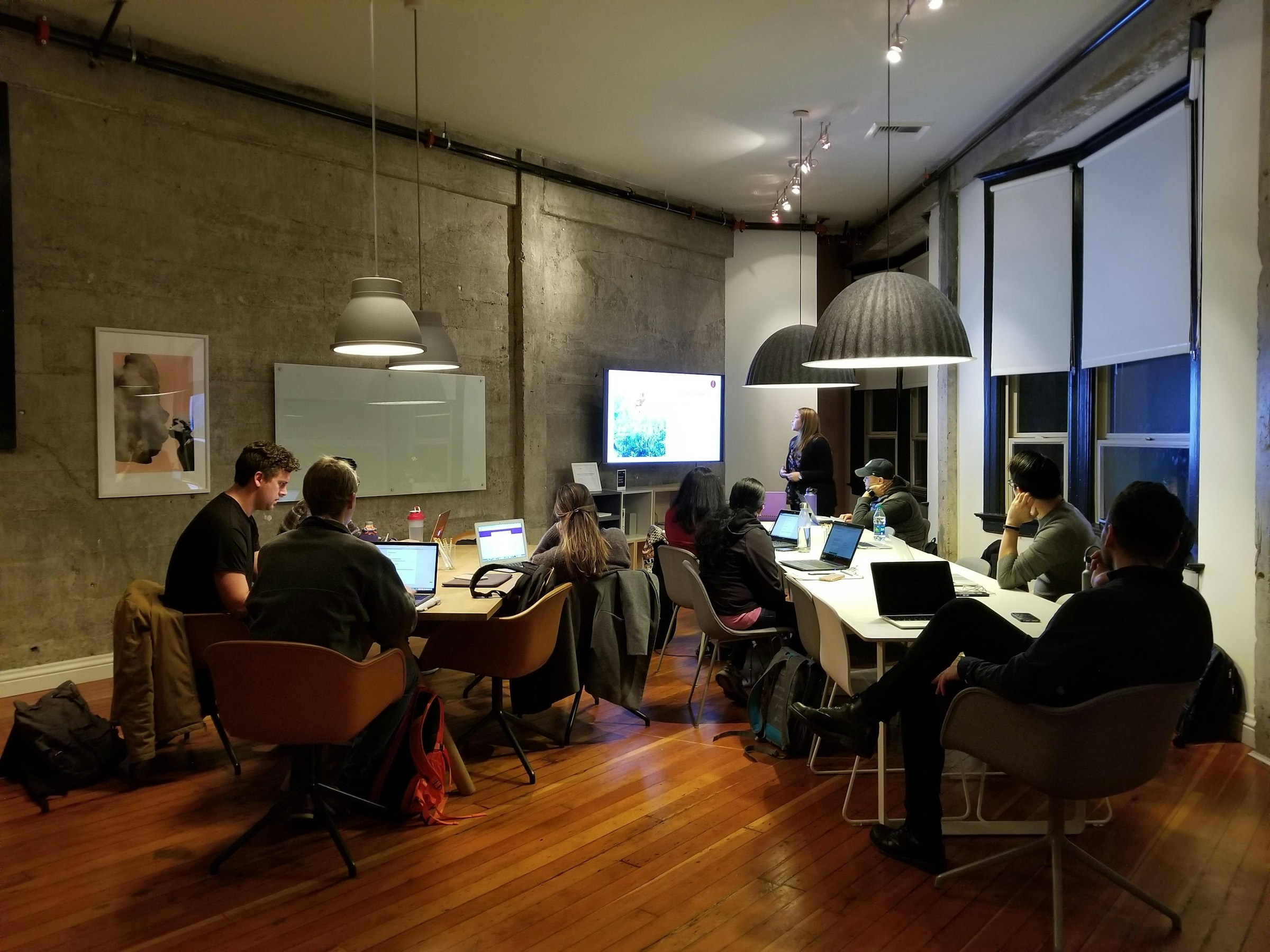
TCTF Academy embodies this model. Learning happens through structured projects with peer review, cohort-based courses where participants learn together, and mentorship relationships where experienced professionals guide newer ones through real challenges. The learning is not theoretical — it is applied, reviewed, and verified.
Peer review is the mechanism that makes community-driven learning rigorous. When you complete a project in TCTF Academy, it is not graded by an algorithm or a teaching assistant who has never worked in industry. It is reviewed by peers and mentors who are active professionals — people who know what good work looks like because they produce it every day. Their feedback is specific, actionable, and grounded in real-world practice.
Cohort courses create accountability and community. Instead of watching videos alone and dropping out after week two, you learn alongside a group of peers who are at a similar level and working toward similar goals. The social pressure of not wanting to let your cohort down, combined with the support of people facing the same challenges, dramatically improves completion rates and learning outcomes.
The result is professionals who can demonstrate what they learned through verified project outcomes — not just a certificate that says they watched some videos. The learning is the credential, because the learning produced real, reviewable work.
📖TCTF Academy: structured projects with peer review, cohort courses with accountability, and mentorship from active professionals. Learning through practice produces verified outcomes — not just certificates from watching videos.

04The Barriers Have Never Been Lower
In 2026, the barriers to building a tech career have never been lower. You do not need a degree from a prestigious university — you need verified contributions that demonstrate your skills. You do not need to live in a tech hub — you need an internet connection and a platform that connects you to global opportunities. You do not need expensive bootcamps or courses — you need a community that supports learning through practice and provides feedback from experienced professionals.
TCTF sits at the intersection of all three trends. The achievement system provides verified credentials based on real contributions. The global platform connects professionals across borders with payment infrastructure that works internationally. TCTF Academy provides community-driven learning with peer review, cohort courses, and mentorship.
This does not mean building a tech career is easy. The bar for quality is higher than ever — employers expect more because better tools and better learning resources are available. But the barriers to entry — the gatekeeping mechanisms that kept talented people out based on geography, wealth, or educational pedigree — are falling.
The professionals who thrive in this new landscape are the ones who embrace all three trends: they build verified track records through real contributions, they connect globally rather than limiting themselves to local opportunities, and they learn continuously through community practice rather than one-time educational events.
The degree is not dead. But it is no longer sufficient, and it is no longer necessary. What matters in 2026 is what you can demonstrably do — and platforms like TCTF exist to make that demonstration possible for everyone, regardless of background.
🚀No degree required. No tech hub required. No expensive bootcamp required. What you need: verified contributions, global connections, and continuous learning through community practice. The barriers have never been lower — and TCTF is designed for exactly this moment.
The three trends reshaping tech careers in 2026 — verified credentials, remote-first talent pools, and community-driven learning — all point in the same direction: what you can do matters more than where you studied, where you live, or who you know. TCTF is built around this reality. The achievement system verifies what you can do. The global platform connects you to opportunities regardless of geography. TCTF Academy helps you learn through practice with peer feedback. The portfolio is king, the barriers have never been lower, and the professionals who embrace these trends will build careers that no degree alone could provide.
Editor's Note: TCTF Academy cohort courses and peer review features are launching in phases. Join the foundation to be among the first to access community-driven learning designed for the skills-over-degrees era.
CareerFuture of WorkEducationCommunity
Never miss a post
Subscribe to get the latest TCTF articles delivered to your inbox.