
MonthlyVol. 1, Issue 3
Agentic AI: What It Means for Software Development and Why We're Paying Attention
Agentic AI is reshaping how software gets built. We explore what autonomous AI agents are, how they differ from copilots, the real-world implications for development teams, and how TCTF is approaching AI-assisted workflows.
CautiousAI Approach
DisabledAI at Launch
Q1 2027AI Re-enable
Per-UserUsage Tracking
34TCTF Services
Translation, Text GenAI Features
If you have been following the AI conversation in software development, you have probably noticed a shift. The tools are no longer just suggesting the next line of code. They are reading entire codebases, planning multi-step changes, running tests, and iterating on their own work. This is agentic AI — and it is changing how software gets built. In this article, we break down what agentic AI actually is, how it differs from the copilots we have been using, and what it means for The Cometbid Technology Foundation as we build a platform with 34 microservices.
01What Is Agentic AI?
Agentic AI refers to AI systems that can act autonomously to accomplish goals. Instead of responding to a single prompt with a single output, an agentic system breaks a goal into steps, executes those steps, evaluates the results, and adjusts its approach — all without waiting for human input at every stage.
In software development, this means an AI that does not just autocomplete a function. It reads the surrounding code, understands the project structure, writes the implementation, runs the tests, sees the failures, fixes them, and presents a working result. It plans. It iterates. It recovers from mistakes.
The key difference from earlier AI tools is autonomy. A copilot suggests. An agent acts. A copilot waits for you to accept or reject each suggestion. An agent takes a task, works through it, and comes back with a result — or asks for clarification only when it genuinely cannot proceed.
🤖A copilot suggests the next line. An agent takes a task, plans the approach, writes the code, runs the tests, and comes back with a working result.
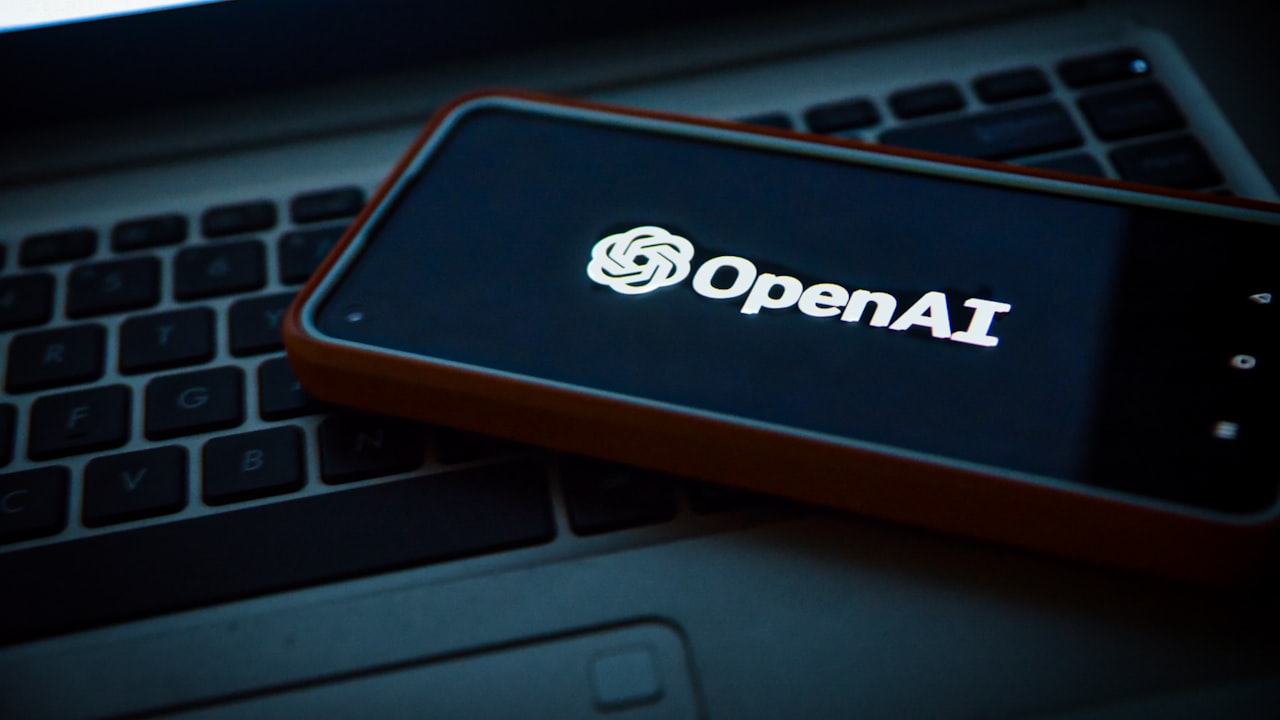
02Copilots vs. Agents: The Spectrum
It helps to think of AI assistance as a spectrum rather than a binary.
At one end, you have autocomplete — tools that predict the next few tokens based on what you have typed. GitHub Copilot started here. It is fast, low-risk, and useful for boilerplate, but it does not understand your project.
In the middle, you have chat-based assistants — tools like ChatGPT or Claude that you can ask questions, paste code into, and get explanations or suggestions. They understand context within a conversation but do not have access to your codebase or tools.
At the other end, you have agentic systems — tools that have access to your files, your terminal, your build system, and your test suite. They can read code, write code, run commands, interpret results, and iterate. They operate in a loop: plan, act, observe, adjust.
The industry is moving rapidly toward the agentic end of this spectrum. Tools like Cursor, Windsurf, Kiro, and others are building development environments where AI agents can navigate codebases, make multi-file changes, and verify their own work. The developer's role shifts from writing every line to directing, reviewing, and deciding.
03What Agentic AI Can Do Today
As of early 2026, agentic AI tools can reliably handle several categories of development work.
Code generation from specifications: given a clear description of what a function, API endpoint, or component should do, agents can produce working implementations that follow the patterns in your existing codebase.
Bug investigation: agents can read error logs, trace through code paths, identify the root cause, and propose fixes — often across multiple files.
Refactoring: renaming, restructuring, extracting functions, migrating patterns. Agents handle the mechanical work of applying a change consistently across a large codebase.
Test writing: given an implementation, agents can generate unit tests, integration tests, and edge cases. They can also run the tests and fix failures.
Documentation: generating API docs, README files, inline comments, and architectural descriptions from code.
What they cannot reliably do yet: make architectural decisions, evaluate trade-offs that require business context, design user experiences, or handle ambiguous requirements where the right answer depends on judgment rather than logic.
✅Agents excel at: code generation, bug investigation, refactoring, test writing, documentation. ❌ Not yet reliable for: architecture decisions, UX design, ambiguous requirements, business trade-offs.
04The Risks We Are Watching
Agentic AI is powerful, but it introduces risks that development teams need to manage.
Cost is the most immediate concern. AI agents consume tokens — lots of them. A single agentic session that reads a codebase, plans changes, writes code, runs tests, and iterates can consume thousands of tokens. At scale, across a team, the costs add up quickly. Without usage tracking and rate limiting, a single developer could generate hundreds of dollars in API costs in a day.
Quality is the second concern. Agents can produce code that passes tests but misses the point. They optimize for the literal instruction, not the intent behind it. A human reviewer who understands the business context is still essential.
Security is the third concern. Agents that have access to your codebase, your terminal, and your deployment pipeline are powerful — but that power is a risk if the agent makes a mistake or if the underlying model is compromised. Guardrails, sandboxing, and review gates are not optional.
Dependency is the fourth concern. Teams that rely too heavily on AI agents risk losing the deep understanding of their own codebase. When the agent is unavailable or makes a mistake, the team needs to be able to step in. AI should augment expertise, not replace it.
💰Without usage tracking and rate limiting, AI costs can spiral. That is why TCTF is building cdk-ai-services before enabling AI features for users.
05How TCTF Is Approaching AI
At The Cometbid Technology Foundation, we are taking a deliberate, cautious approach to AI.
Internally, we use agentic AI tools extensively during development. Building 34 microservices, writing hundreds of Lambda functions, designing DynamoDB access patterns, and creating 116 email templates — AI agents help us move faster on the mechanical work while we focus on architecture, design, and decision-making.
For the platform itself, we have built AI features into the frontend — translation and text generation are already part of the Cometbid Social and Member Dashboard interfaces. But these features will be disabled at launch with Coming Soon badges.
Why? Because AI features without usage controls are a cost risk. Translation and text generation call external AI APIs, and every call costs money. Without per-user rate limiting and usage tracking, a small number of heavy users could generate disproportionate costs. We are not willing to launch a feature we cannot sustain.
The plan: in January 2027, we deploy cdk-ai-services — a dedicated service for AI usage tracking and per-user rate limiting. Once that is in place, we re-enable translation and text generation, tied to subscription tiers. Free users get a daily limit. Premium users get more. Enterprise users get the most. The costs are predictable, the usage is tracked, and the feature is sustainable.
🛡️ AI features are built but disabled at launch. We re-enable them in January 2027 once cdk-ai-services provides per-user rate limiting tied to subscription tiers.
06What This Means for the Tech Community
Agentic AI is not going to replace developers. But it is going to change what developers spend their time on.
Less time writing boilerplate. Less time on mechanical refactoring. Less time writing the first draft of tests and documentation. More time on architecture, design, code review, and the decisions that require human judgment.
For the broader tech community — including the non-technical contributors we talked about in our origin story — AI lowers the barrier to participation. Translation features make platforms accessible across languages. Text generation helps people who are not native English speakers write professional posts and messages. Smart notifications reduce information overload.
At TCTF, we see AI as a tool that makes the platform more accessible and the development process more efficient. Not a replacement for human judgment, but an amplifier of human capability.
The key is to adopt it responsibly. Track usage. Limit costs. Review output. Keep humans in the loop for decisions that matter. And never ship a feature you cannot sustain.
07Looking Ahead
The AI landscape is moving fast. By the time we re-enable AI features in early 2027, the capabilities will be significantly more advanced than what we see today. We are designing our AI infrastructure to be provider-agnostic — the cdk-ai-services service tracks usage regardless of which AI provider is behind the feature.
In Q3 2027, the roadmap includes AI auto-reply for messages, smart notification digests that summarize activity instead of listing every event, and code review matching that pairs contributors with reviewers based on expertise. These are features that genuinely improve the user experience — not AI for the sake of AI.
We will share more details as these plans take shape. For now, the message is simple: we are paying attention, we are experimenting, and we are building the infrastructure to adopt AI responsibly when the time is right.

Agentic AI is real, it is useful, and it is changing how software gets built. At TCTF, we use it every day to build the platform. But for our users, we are taking the responsible path — building the features now, deploying the usage controls first, and enabling the features only when we can sustain them. That is not caution for caution's sake. It is respect for the community we are building for.
Editor's Note: This is the March 2026 monthly newsletter. Next in the series: the Origin Story of Cometbid Social, and the Q2 Roadmap in April.
Never miss an edition
Subscribe to get TCTF newsletters delivered to your inbox.



Browse by Month
2026
August
July
June
- Caching Strategies for Serverless, Part 2: ElastiCache Redis for Low-Latency Session and API Caching
- Caching Strategies for Serverless: From In-Memory to DynamoDB-Backed TTL Caches
- Rate Limiting at Serverless Scale: Tiered Throttling with DynamoDB
- TCTF's DynamoDB Framework, Part 2: Building a Fluent Query Builder in TypeScript
May
April
March
February